 Courtesy of subjectsSave this storySave this story
“I’m just going to cut the rest of it off.” These words looped through Susan Wiley’s mind as she sat in the salon chair, working up the courage to finally part ways with her relaxed hair. The 60-year-old had permed her hair every six weeks for 30 years before realizing that chemically straightening her hair had become a time-consuming and self-imposed obligation. “I was so exasperated with having to go to a salon and spend my whole Saturday waiting on hairstylists that were running late,” she says.
As Wiley entered menopause and experienced the hot flashes, hair-thinning, and other physical symptoms that come with it, her straightening treatment—once, a moment for pampering—became an exhausting chore.
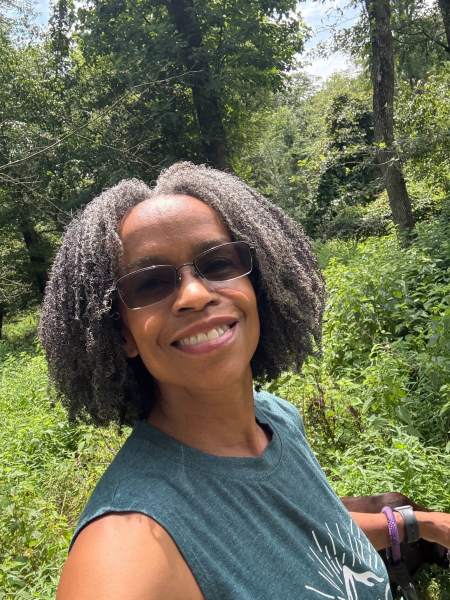
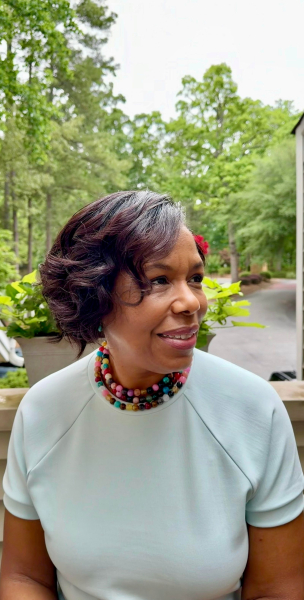
Susan Wiley in 2025, wearing her natural hair.
Courtesy of Susan Wiley
Like Wiley, many Black women in their 50s and beyond reach the same breaking point and choose to ditch their relaxer. Brendnetta Ashley, a hairstylist in San Francisco, has recently noticed this shift as her more mature clients have started going through menopause. With the hair changes that often come with it, “they didn’t want to put any extra stress on their hair, like getting a relaxer or using harsh chemicals,” says Ashley.
Facing the physical realities of aging, these women are going natural in response to what their hair is already going through, and it requires unlearning decades of messaging about what is acceptable for Black hair.
Robin Richards’s big chop was more spontaneous when, at 55, she “just got up from the kitchen table and went upstairs and chopped it.” Richards was tired of scheduling hair appointments every few weeks, ultimately letting go of the ritual when she learned of reports linking chemicals commonly found in relaxers to cancer. She’s been natural for four years now.
While many millennial and Gen Z Black women embraced their natural texture during the YouTube-driven natural hair movement of the early 2010s, older Black women were often left out of the cultural conversation. The faces of the movement, from the models fronting natural hair campaigns to the content creators filming washday tutorials, were overwhelmingly young—women like Chizi Duru, now 30; Whitney White, now 40; and Shaneice Crystal, 31.
Richards vaguely remembers seeing messages on social media around 2016 about Black women embracing their natural hair. “I was pleased that wearing our natural hair was more accepted,” she says, but she wasn’t heavily involved in or influenced by the discourse.
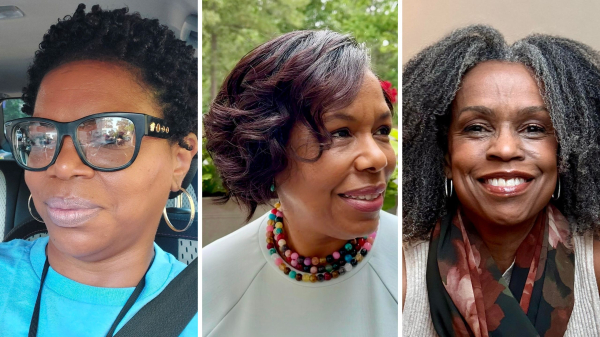
As the Black community is on the verge of another natural hair movement, older women are finally entering that conversation and sharing their experiences. We spoke to four Black women over 50—Wiley, Richards, Avvi Forcer, and Marie Randall—who went natural later in life. For these women, parting with the comfort and familiarity of straight hair required more than a social trend. It would take a deeply personal desire to return to their most authentic selves.
Why are more Black women over 50 going natural now?
For many Black women, going natural wasn’t simply a matter of trying a new style. It required unlearning decades of messaging that framed straight hair as more professional, manageable, and ultimately more acceptable. All four women we spoke to said they had considered going natural earlier in life, but the limited product options, a lack of education around caring for natural hair, and the social pressures tied to straightened styles often kept them from making the transition sooner.
For Wiley’s generation, straight hair wasn’t simply about aesthetics; it was often tied to social survival. Raised during the early years of integration following the Civil Rights Movement, many older Black women learned to view straightened hair as a way to navigate predominantly white schools, workplaces, and social spaces more safely. “For women my age who grew up back in the ’80s, our hair was not celebrated at all; everybody had a relaxer back then,” says Wiley, who was raised in a predominantly white neighborhood in Maryland. “My hair didn't look like my friends’ hair. So all of those things painted this negative picture that I carried all the way into adulthood,” Wiley says.
Many millennial and Gen Z women—including myself—explored going natural in college as part of the common self-discovery that comes with leaving home. This was during the beauty boom on YouTube during the 2010s, where there was a rise in service-driven beauty tutorials on the platform. Many of us saw washdays as an opportunity for pampering and experimentation with the different hair products and styles that our favorite YouTube creators were touting.
Black women in Gen X, however, had a different experience. Wiley recalls that during her high school and college years, Black women didn’t have nearly as many styling options as they do now, and there weren’t tutorials to guide them through the process (YouTube launched in 2005 when these women were in their 40s). Braids, silk presses, and similar styles weren’t “really a thing.” Your hair was either relaxed or worn in its natural texture—and the latter wasn’t very common. Richards, who began relaxing her hair when she was 13-years-old, echoes this: “It was easier for it to be relaxed; that way, it could just be washed and put in a ponytail,” she says.

Wiley with relaxed hair in 2012.
Courtesy of Susan Wiley
When these women graduated from college, the pull to conform to Eurocentric standards didn’t subside—if anything, it intensified. They faced pressure that influenced not only how they styled their hair but also how they presented themselves in the workforce. “Being in corporate America, you always just wanted to stay mainstream,” says Richards, who works in the medical field. “You didn't want to bring any attention to your hair or to the fact that it was different.” This was before the CROWN Act (legislation designed to prohibit workplace discrimination based on hair texture) was enacted, so women of Richards’s generation really felt that wearing their natural hair at work wasn’t an option.
Wiley faced a similar dynamic in her career. “You get so used to this idea of code-switching and trying to present yourself in a way that is acceptable to other people,” she says, noting that relaxers became such a part of her identity that the idea of wearing natural coils to work felt intimidating.
The pressure to conform didn’t always come from outside the Black community, though. As the saying goes: “It be your own people.” Forcer experienced this firsthand 13 years ago. She was 43 and wearing her natural hair at a family member’s wedding. “Everyone had relaxed hair,” she says, adding that she felt uncomfortable because her hair made her feel like she wasn't “dressed up” enough.
Two years later, she got an invitation to attend another wedding with the same family members. This time, she chose to relax her hair before the festivities. “I always loved the natural look, but I wasn't as grounded in myself, so I gave in and got a relaxer,” she adds.
A few years after getting a relaxer, scalp dermatitis drove Forcer to go natural again. This time, she had more confidence—and the look stuck. She’s now 56 and has not used a relaxer since.
Like Richards, Randall, 59, went natural at 55. Her decision to do so, though, was part of a much larger emotional reset. Randall got her first perm at seven years old and consistently relaxed her hair for nearly five decades. After losing her mother in 2021, Randall took time away from work to focus on her mental and physical health. Cutting off her relaxed hair was a part of that reset. “I did the big chop myself, before I went into a salon,” she says. “The next day, I looked in the mirror, and I had all these beautiful curls—really short, but really beautiful.”
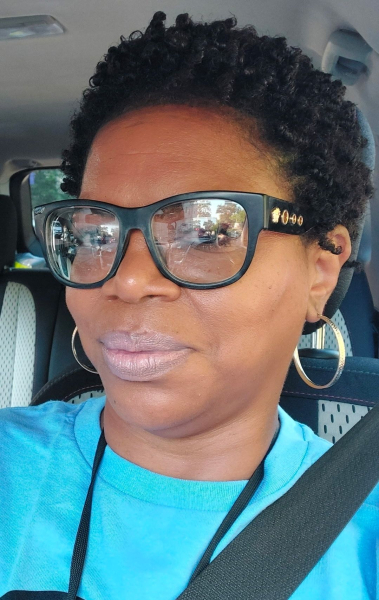
Marie Randall after her big chop in 2021.
Courtesy of Marie Randall
Before her big chop, Randall had already scaled back her relaxer touch-ups to twice a year instead of every few months. As a result, she began noticing more of her natural texture peeking through at the roots than ever before, which made her realize she didn’t actually know what her natural hair looked like.
Having started on relaxers as children and teenagers, the women we spoke to spent decades disconnected from their natural texture. Eventually, curiosity became reason enough to meet that version of themselves again. Wiley, Forcer, Randall, and Richards also found that age came with less regard for what other people thought about them. “As I was approaching menopause and all these physical changes, I got really tired of performing for people. I just decided to present myself as who I naturally am,” says Wiley.
Richards relates to this desire to be unapologetic in her later years. “I used to always tell my son, 'When I turn 60, I'm going to chop all my hair off, and I'm going to color it blonde and buy me a convertible,'” she says. “Because when you get older, you don't have to fit in. You're more accepting of how you look and how you feel, versus when you're younger, trying to stay with the trends and have long, beautiful hair.”
How do menopause and aging affect relaxed hair?
Hair damage from relaxers isn’t exclusive to people in their 50s and older. However, the negative effects of chemical straighteners can become more pronounced with age. “As women get into menopause, something called miniaturization happens,” says Yolanda Lenzy, MD, a board-certified dermatologist in Massachusetts. “It’s when the hair follicle gets smaller.” She explains that it occurs due to the large drop in estrogen and progesterone that happens during menopause. The result is sparser hair. Add relaxers into the mix, and your hair can appear even thinner. “Relaxers break disulfide bonds in the hair, causing curls to become straight, but when you’re already experiencing thinning, perming your hair is going to lead to decreased hair density,” Dr. Lenzy says. “So even though you have the same amount of hair, perming it can make it look less full as opposed to if you had it natural.”
Richards recalls experiencing exactly what Dr. Lenzy described: thinning hair caused by a combination of the natural miniaturization process and her continued perm appointments. Wiley, too, found that as she aged, her hair changed. It became drier and more brittle, and suddenly the relaxer that she’d gotten for years without issue no longer felt compatible with her hair. “I did not have this beautiful, long, flowing, relaxed hair. My hair was very, very short, and it was broken and damaged.” Eventually, she had to ask herself, Why am I doing this?
Dr. Lenzy explains that hair density isn’t the only thing that can change. “I’ve definitely seen textural changes that come with aging and menopause,” she says. “If you had very coarse hair in your younger years that’s now becoming fine and looser in texture, you could run into some issues if you continue to relax your hair.” Dr. Lenzy adds that the main risk of continuing to relax natural hair that’s becoming finer and looser in texture is also loss of density.
For her patients who are dealing with thinning and hair loss caused by menopause, Dr. Lenzy prescribes minoxidil either in a topical form or as a prescription tablet. And for those who want a more natural alternative, “pumpkin seed extract has been found to help lengthen the growth phase of the hair cycle,” she says.
Caring for natural hair after giving up relaxers
When you’ve gone for decades disconnected from your natural hair, there can be a learning curve in figuring out how to care for your curls and coils. Randall and Richards opted for a big chop upfront, while Wiley and Forcer chose to transition, partially because they were nervous about having to suddenly care for a texture they were unfamiliar with.
“I kept my relaxed ends for about as long as I could,” says Wiley, whose journey to natural hair took about a year. “I remember the day I cut off my relaxer and just had natural hair. I felt this feeling of freedom. I didn't really realize it, but having a relaxer kind of made me feel trapped, and I think that was because I felt it was like an obligation, like I had to do it.” No longer being completely bound to a relaxer, these four women began navigating the fun, at times frustrating, terrain of natural hair care.
Wiley often wears her hair in a stretched state, combing through her gray coils with a blow-dryer before doing a braid-out. “My hair is something that I'm still learning how to work with and how to do the things that are going to make it look its best,” she says, adding that going natural has even helped her embrace her grays.
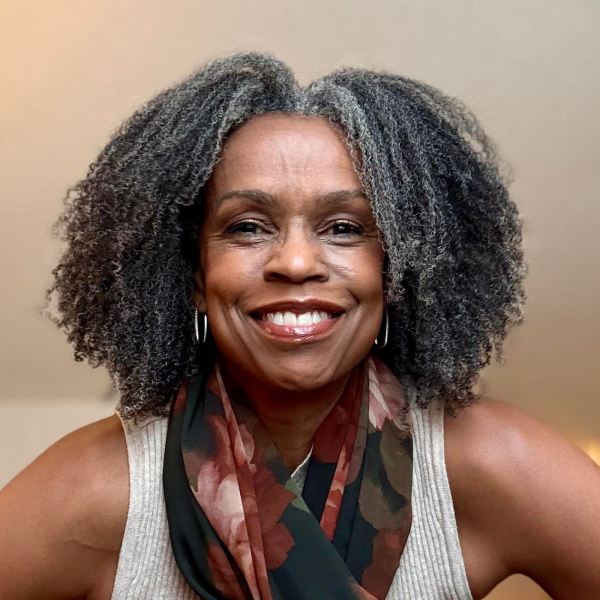
Wiley in 2026, wearing her natural hair.
Courtesy of Susan Wiley
Richards still prefers to wear her hair straight and gets a silk press every two weeks, though her natural pressed hair is fuller and healthier than when it was relaxed; plus, she loves being able to wear it curly whenever she wants.
 Courtesy of Robin Richards
One of the most surprising things about going natural for these women has been the ease of caring for their hair. There’s a common sentiment in the Black community that textured hair (especially type 4 hair) is hard to manage. This misconception is part of the reason these women held on to their relaxers for so long. But Randall has found that washday is not as time-consuming as she thought, and is actually enjoyable. Now, she makes it a self-care day, picking a Saturday or Sunday to wash her hair, deep conditioning while she does chores, then styling it in twists or braids. “It feels more rewarding,” she says.
Regardless of age, Dr. Lenzy tells all her patients with natural curls and coils to wash their hair once a week. Going two weeks without a wash is acceptable, but ideally no longer than that. Ashley gives her clients the same guidance. “I recommend using a hydrating shampoo and conditioner, considering deep conditioning [weekly], especially if the hair is on the drier side, and using a water-based moisturizer versus a lot of oils on the scalp,” says Dr. Lenzy, who adds that products heavy in oils and occlusives “can create a breeding ground for dandruff or seborrheic dermatitis by feeding the yeast that naturally lives on the scalp.”
Going natural for Gen Z and millennial Black women usually looks like a lot of DIY (with the help of YouTube and TikTok ‘experts’), but for Gen X, the salon is still their main source of hair-care knowledge—and even community. “Many of my mature ladies actually need the assistance. So that's where we [stylists] come into play by offering these maintenance services,” says Ashley. “I like to do a lot of two-strand twists on them. That way, they can wear that style for maybe a week. Ashley teaches her clients how to undo the twists so they can wear a twist-out for an additional week. “This way, they're getting two weeks of wear out of the style versus having to frequently do their hair, which can be more strain on them,” she adds.
No matter your age, embracing your natural hair as a Black woman can be an emotional and transformative experience—one that goes far beyond aesthetics. For women who have spent decades wearing relaxers, that shift can make them feel especially vulnerable. But for those ready to take the leap, Forcer, Randall, Wiley, and Richards say the decision can also be freeing: an opportunity to prioritize health, rediscover themselves, or simply move through the world more authentically. As Richards says, “You have no idea what lies under there. Your hair is beautiful.”
Leave a Reply